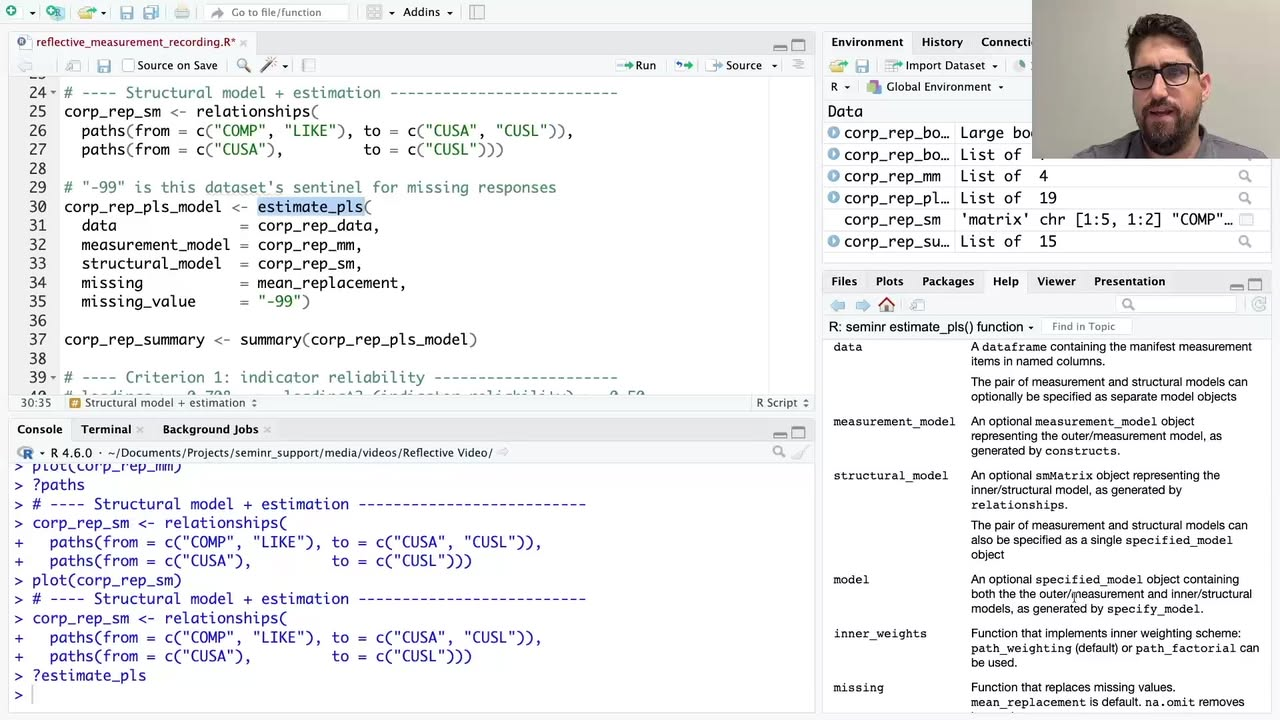
Five new tutorial videos walk through a complete PLS-SEM analysis in R with SEMinR, each paired with a chapter of the 2nd edition of PLS-SEM Using R: A Workbook — which will be open access and free to download.
SEMinR is no longer R-only: experimental ports now bring the same toolkit to other languages, starting with Python and JavaScript/TypeScript. Each port mirrors the R API and is validated for numerical parity against the R package using golden fixtures — so you can stay in the language your model analysis lives in.
SEMinR v2.5.0 is now on CRAN, bringing prediction to every interaction type, more flexible plots, a public accessor API for developers, and a round of bug fixes.
seminrExtras 1.0.0 is now on CRAN — a companion package for SEMinR that brings the advanced PLS-SEM assessment toolkit (prediction, necessity, heterogeneity, measurement confirmation, and overfit diagnostics) into R.
SEMinR v2.4.2 is now on CRAN. Rounding up everything that landed across v2.4.0 and v2.4.2 — bootstrap p-values, missing-data handling, and a batch of bug fixes — plus a look at what’s coming next.
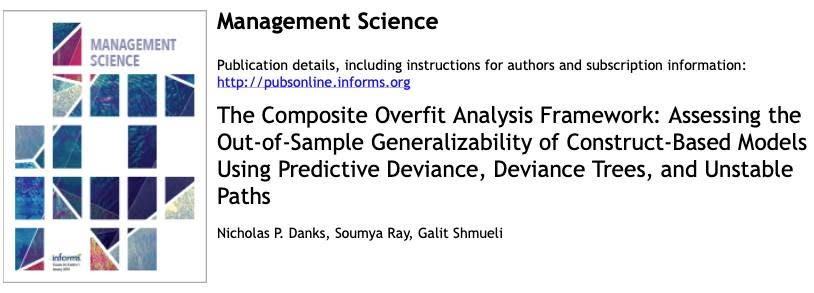
Nicholas Danks’ article — the bulk of his dissertation work — introducing the Composite Overfit Analysis (COA) Framework for assessing the out-of-sample generalizability of construct-based models is now published in Management Science.
SEMinR v2.3 is available for installation from CRAN, and it brings the most requested feature from our users: PLS-MGA.
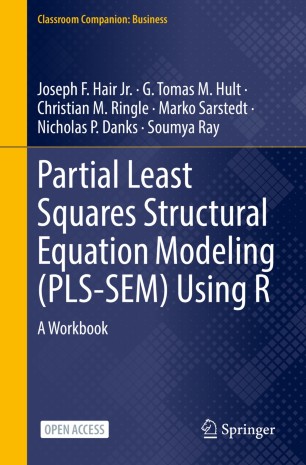
Our textbook for PLS-SEM Using R has now reached over 45,000 downloads. The book is completely open-access and is accompanied by SEMinR which is free to download.
We’re proud to announce the release of SEMinR v2.0! So many new features, including the single most requested feature of model visualization created by our brilliant new co-author, André Calero Valdez, and his team at Aachen University.